

There's a certain kind of laughter you hear in Irish families when things aren't going well. It's not belly-laughing funny. It's not pretending everything's grand.
It's more like a half-smile, a dry remark, a comment that lands just lightly enough to let everyone breathe again when times are tough.
And if you didn't grow up with it, you might wonder how anyone could laugh at these times, when life is heavy, when hearts are sore, when nothing feels settled.
But for the Irish, humor has never been about avoiding pain. It's been about surviving it.
This little piece isn't about side-splitting jokes or the kind of stories comedians tell on a stage. It's about the quieter turn of phrase, the small, well-timed remark that softens a hard moment. So if you've come looking for punchlines, this may not be the post for you.
But, if you wish to explore the subtle, everyday Irish wit that makes difficult moments a little easier to carry, then please do read on.
Laughing When Tears Would Be Easier
Irish humor doesn't show up before hardship. It shows up after life has already made its point.
There's an unspoken understanding that crying and laughing aren't opposites. They often arrive together, or one slips in right behind the other.
It's not denial. It's acknowledgment, with just enough lightness to make the sorrow and grief manageable.
A quiet way of saying: Yes, this is hard. And no, it won't be the end of us.
A Small Moment That Says It All
I remember being at a family gathering where the conversation turned serious, as it often does. Someone was sick. Someone else was struggling. The room grew quiet, that familiar Irish hush settling in, cups paused halfway to lips.
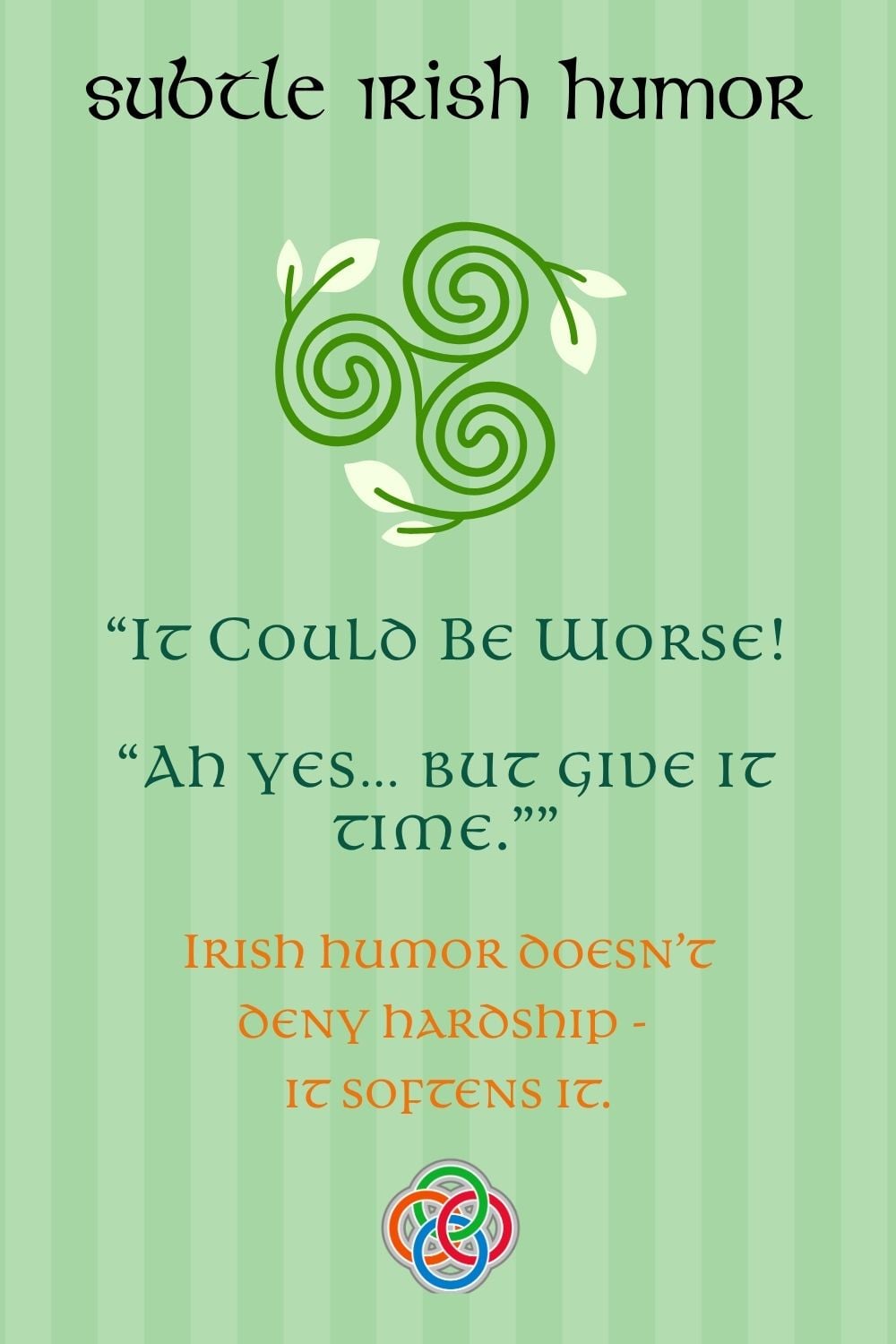
After a long silence, someone finally said, "Well… it could be worse."
Another voice came back without missing a beat: "Ah yes. But give it time."
The pause that followed was almost ceremonial.
Then the laugh came, soft, surprised, a little guilty, but relieving all the same. Not because anything was suddenly funny, but because everyone recognised the truth in it.
Nothing was fixed. The problems were still sitting right there at the table with us. But the air had shifted. Shoulders dropped. People breathed again.
That's Irish humor. It doesn't solve. It steadies.
The Little Moments You Start to Notice
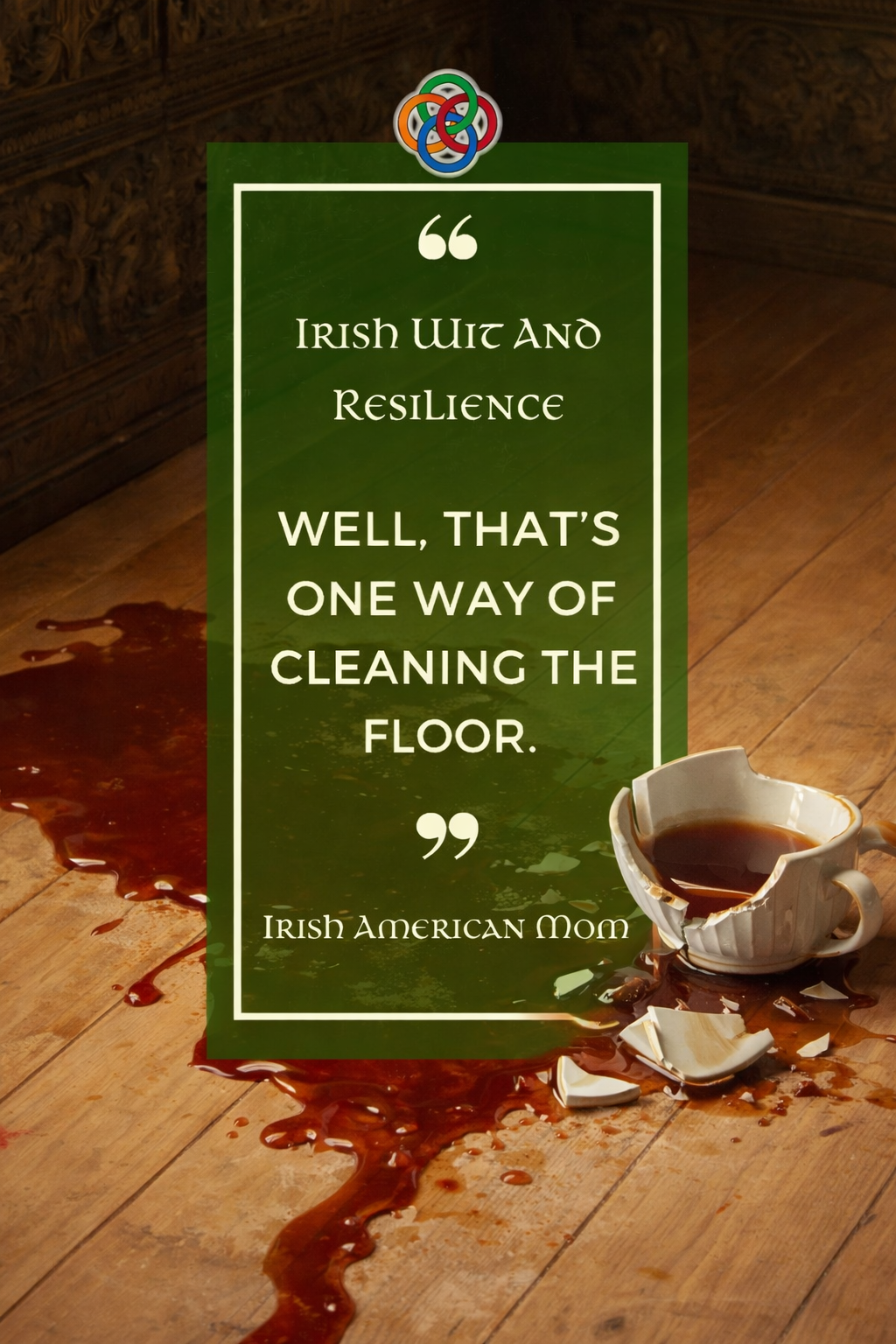
Once you start paying attention, you hear it everywhere. After a stretch of miserable weather, when it rains for days, and dampness seeps into everything, you might hear someone say: "It's fierce damp."
"Well, sure it keeps us soft," will come that quiet and steady reply.
No fuss. No real complaint. Just a small turning of the moment so it doesn't drag everyone down with it.
Or someone going through a rough time, nothing dramatic, just life piling on. "How are you keeping?" someone asks.
"Oh, you know yourself," comes the answer, with a sarcastic twist. "Living the dream."
And from across the room, you might hear: "Ah yes… but whose dream is the question."
There's a quiet laugh. No one pretending things are grand. Just a shared understanding without making a show of it.
Coping with Illness and Life's Challenges
Then there are the moments around illness, when things could easily tip into fear.
"How are you doing now?" someone asks.
"Still here."
"Well that's a good start."
It's not a joke, but a response with the perfect hint of wit. It's just enough. Enough to take the edge off what nobody quite wants to say out loud.
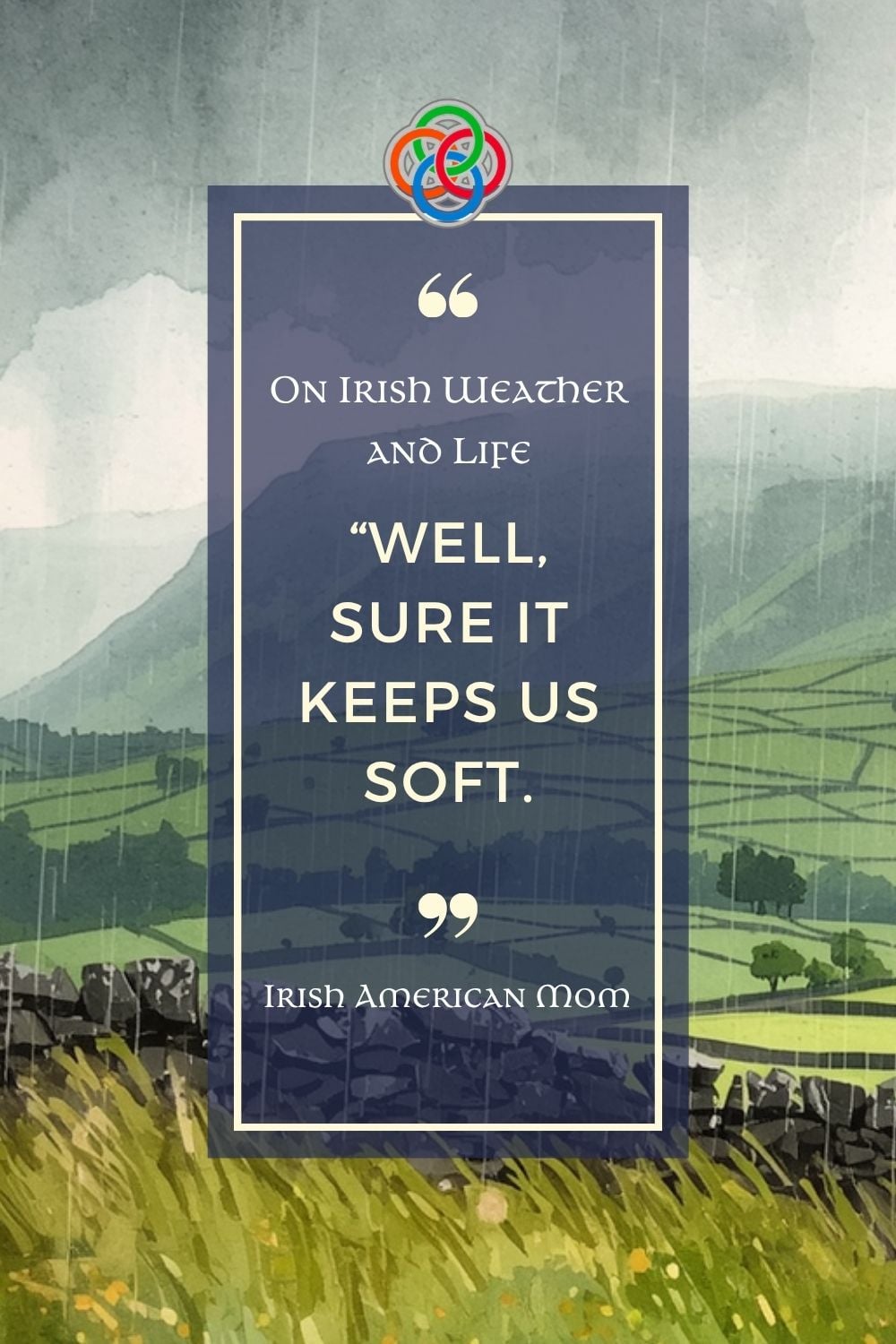
And then the everyday mishaps happen, and a little humor creeps into our Irish coping mechanisms.
A cup slips. Tea everywhere. A pause. A look at the mess.
"Well… that's one way of cleaning the floor."
And on you go.
Humor That Heals, Not Wounds
Irish wit has a way of being sharp, without being cruel.
It turns inward more than outward. There's a natural reluctance to make someone the butt of a joke, especially if they're already carrying something heavy.
The aim isn't to get a big reaction. It's to ease the moment. To leave everyone with their dignity intact. It let's others know, we're all in this life together.
Laughing With Sorrow, Not At It
You see this phenomenon most clearly at Irish wakes. There's grief, of course. Deep grief. But there's also storytelling, remembering, the kind of laughter that arrives gently and sits alongside the sadness without disturbing it.
Because sorrow doesn't need silence to be respected. Sometimes it just needs company. And humor, in its quiet way, keeps sorrow from feeling too lonely.
Irish Wit as Emotional Intelligence
At its core, this kind of humor is a form of emotional intelligence. It reads the room. It knows when enough has been said. It senses when a small remark might lift things, even slightly.
Now, from the outside, especially through a more American lens, the Irish can sometimes be seen as reserved, even emotionally shut down. We're not given to big displays of affection, and avoid saying exactly what we feel out loud.
But that can be a misunderstanding. Because the feeling is there. It's just expressed differently.
It comes through in the timing of a comment; in what's said, and what's carefully left unsaid; in the way a bit of humor is used to sustain and strengthen a moment, rather than avoid it.
Those small, well-placed remarks aren't a lack of emotion. They're a sign of how closely people are paying attention to each other.
It lets people feel what they feel, without letting it overwhelm everything. It's not about being funny for the sake of it. It's about knowing how to truly be with others when things are hard.
Why It Still Matters
These days, there can be a rush to fix things, to put a positive spin on everything, or to avoid difficult feelings altogether. Irish humor takes a different approach.
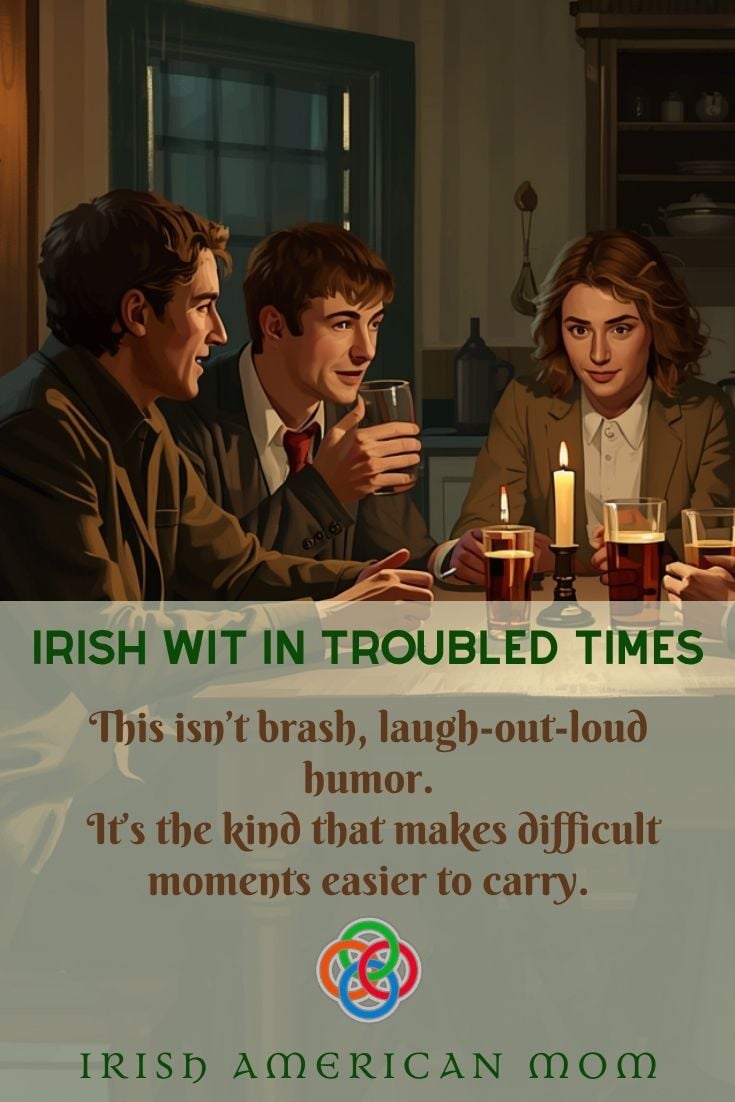
It leaves things as they are, but makes them easier to carry. It doesn't pretend life is simple. It just refuses to let it become unbearable.
And maybe that's why Irish humor still rings true. Because it doesn't try too hard. Because it doesn't deny reality. Because it meets life where it is, and softens it, just a little.
Let's Chat About Irish Humor
I'd love to hear your own examples of this kind of humor. The small remarks. The unexpected laughs. The moments where nothing changed, and yet everything felt a bit lighter.
If you have one, do share it in the comments. There's a comfort in these stories, I think. And like most things in Irish life, they're better when they're shared. 💚

Slán agus beannacht,
(Goodbye and blessings)
Mairéad -Irish American Mom
Pronunciation - slawn ah-gus ban-ock-th
Mairéad - rhymes with parade
Wise Old Words
- Irish Sayings, Blessings and Quotations for Spring
- If You Want Praise, Die. If You Want Honesty, Get Yourself an Irish Friend
- The Son of the Miser is Usually a Spendthrift
- Every Man Is Sociable Until A Cow Invades His Garden

Irish Superstitions
- Bidding Farewell - A Not-So-Simple Irish Ritual
- Furze - The Yellow Flower Of The Irish Landscape
- Irish Primrose Superstitions And Lore
- A Full Moon Over Dublin Bay






Sheila
I love this reflection or rambling as you like to call your writings. I see that ability to remain positive and cheerful, even when times are tough, as distinctively Irish. My grandmother was very quick witted, in a quiet and unassuming way.
Irish American Mom
Hi Sheila - Thank you so much for your kind words. I truly appreciate you taking the time to share your thoughts. I love how you described your grandmother as quick witted in a quiet and unassuming way. That captures something so beautifully Irish, doesn’t it? There’s often a gentle sharpness to Irish humor, not loud or showy, but wonderfully observant and perfectly timed. It’s such a gift to have known someone like her. Those little flashes of wit, especially in difficult times, have a way of lifting spirits and staying with us long after. I think so much of our resilience is quietly passed down through people like your grandmother. Thanks again for reading and for sharing a little piece of her story. It really means a lot. 💚
All the best,
Mairéad ☘️
Maura Knofel
Love your article about making the best of things, O still say-- sure, it could be worse. It seemes to soften the grief. Maura.
Irish American Mom
Hi Maura - Thank you so much for your lovely comment. “Sure, it could be worse!” Isn’t that such a deeply Irish way of looking at things? There’s a quiet wisdom in those words. It doesn’t take away the hardship or the grief, but somehow it softens the edges and helps us carry on. I think that gentle shift in perspective is one of the ways we steady ourselves when life feels heavy. Thank you for sharing that. It really touched me.
Warmest wishes,
Mairéad 💚