
Irish language words are often hauntingly beautiful and since Ireland is the original home of Halloween, let's explore words from the Irish language linked to Halloween.
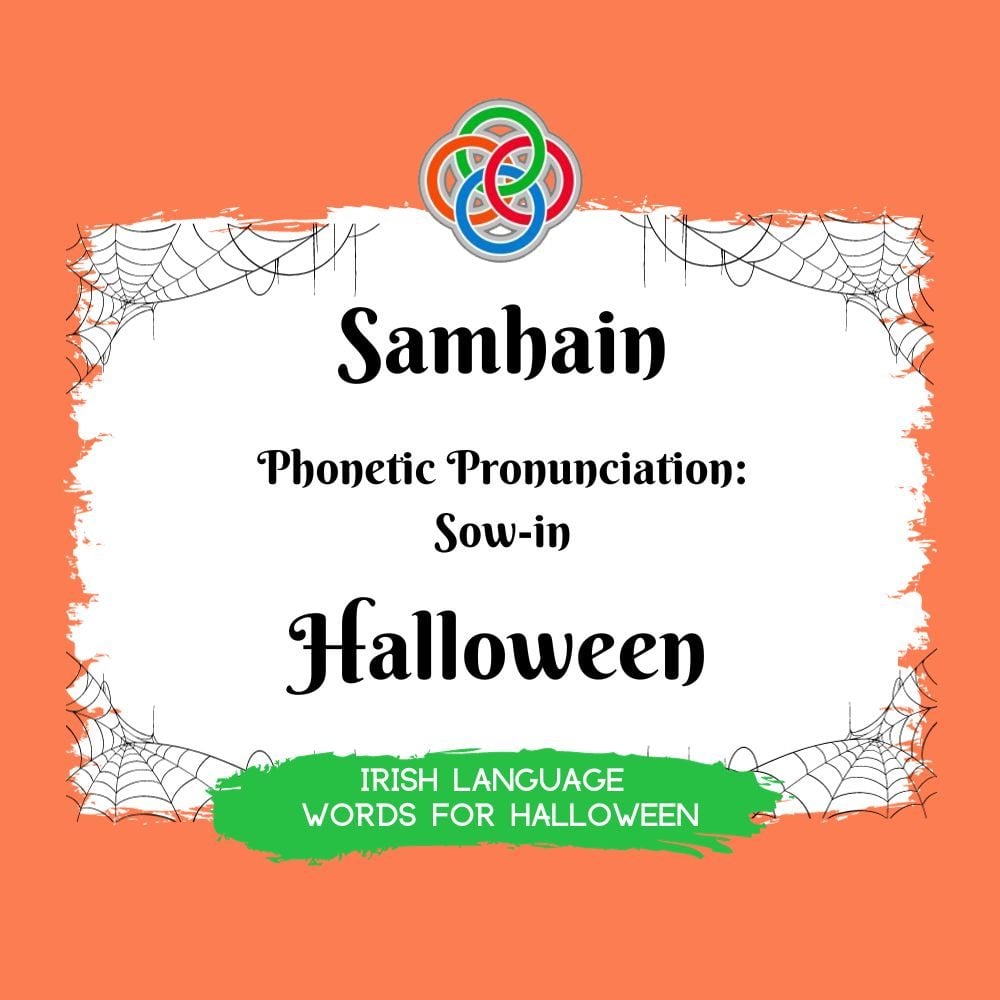
Ireland is considered the birthplace of Halloween, with its origins stemming from the ancient Celtic festival of Samhain (pronounced "sow-in").
Samhain was celebrated in Ireland and other Celtic regions, like Scotland and the Isle of Man, around October 31st, marking the end of the harvest season and the beginning of winter. Our words today include words for fall fare and the foods our Celtic ancestors gathered and stored at this time.
This time of year was seen as a liminal period when the boundary between this world and the Otherworld could be more easily crossed. It was believed that spirits or fairies could enter our world, and the souls of the dead were thought to revisit their homes. Hence, we'll learn some words for bats, spiders and other spooky things.
So let's get started and learn some Irish words associated with this important Celtic holiday.
Irish Words for Halloween
First up is the actual word for the Celtic Festival of Samhain (pronounced sow-in), which is also the Irish word for November, but is often used to refer to Halloween.
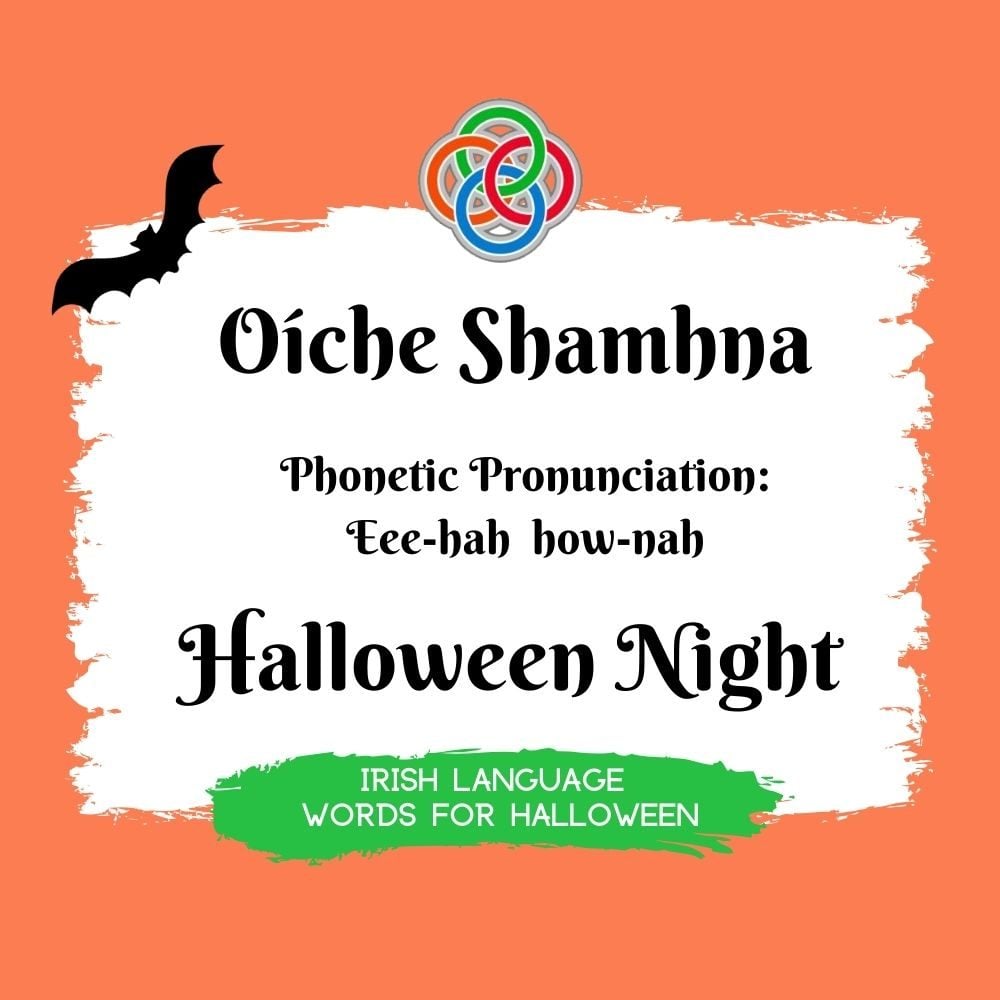
The more technically correct name for Halloween is Oíche Shamhna, meaning the eve of Novemeber. The word Halloween is dervied from All Hallows' Eve.
The Irish word "scanrach" means "frightening" or "scary" in English. It's an adjective used to describe something that causes fear or is capable of being frightening.
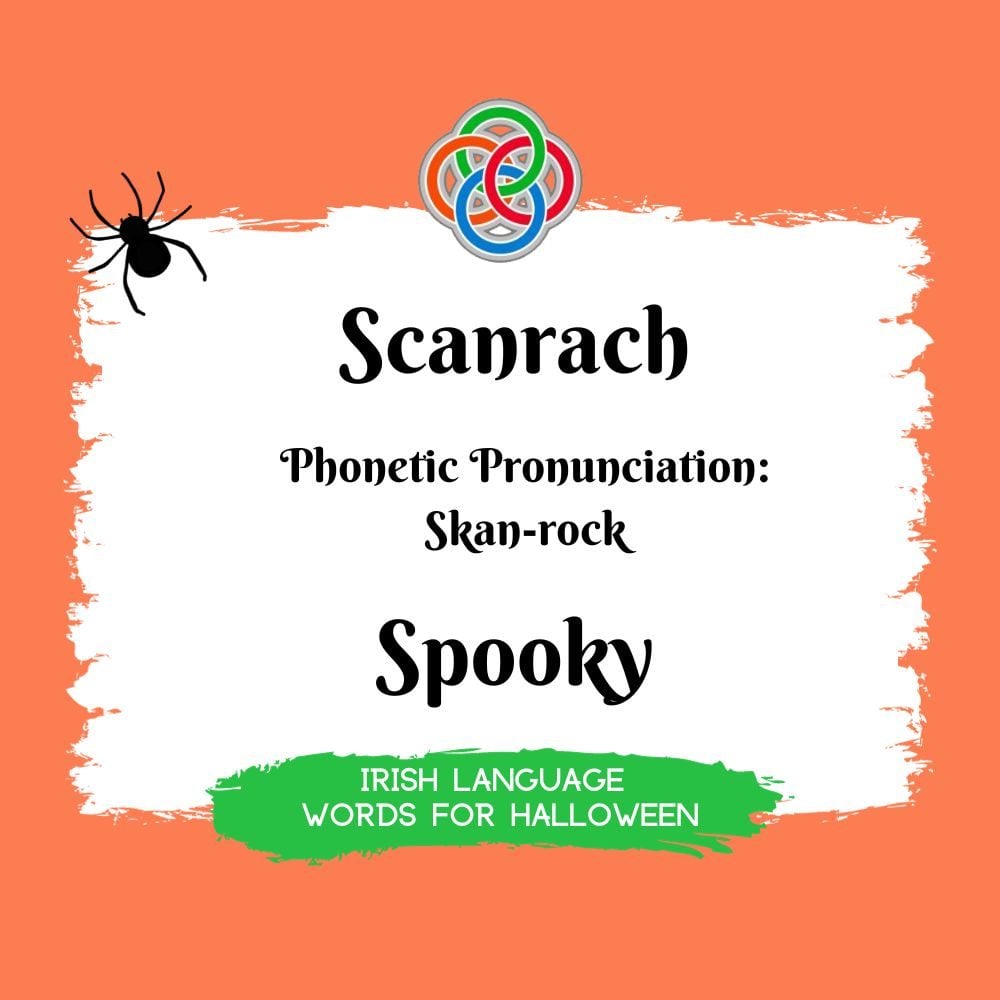
This word can be used in various contexts where you might describe an event, situation, place, or even a story as being scary or fear-inducing or just plain spooky.
Halloween Foods
Halloween originated in a great feast at Samhain, so fall or autumn foods are closely associated with the holiday.
As Christianity spread through Celtic lands, pagan traditions were often merged with Christian practices. Halloween (All Hallows' Eve) precedes All Saints' Day and All Souls' Day. During this period, one medieval Christian practice was "souling," where the poor would go door to door offering prayers for the dead in exchange for food and drink, specifically "soul cakes."
Apples
Apples are a fruit that traditionally ripen in late autumn in Ireland, making them plentiful around the time of Samhain. They symbolize the abundance of the harvest and were commonly used in Celtic feasts and celebrations
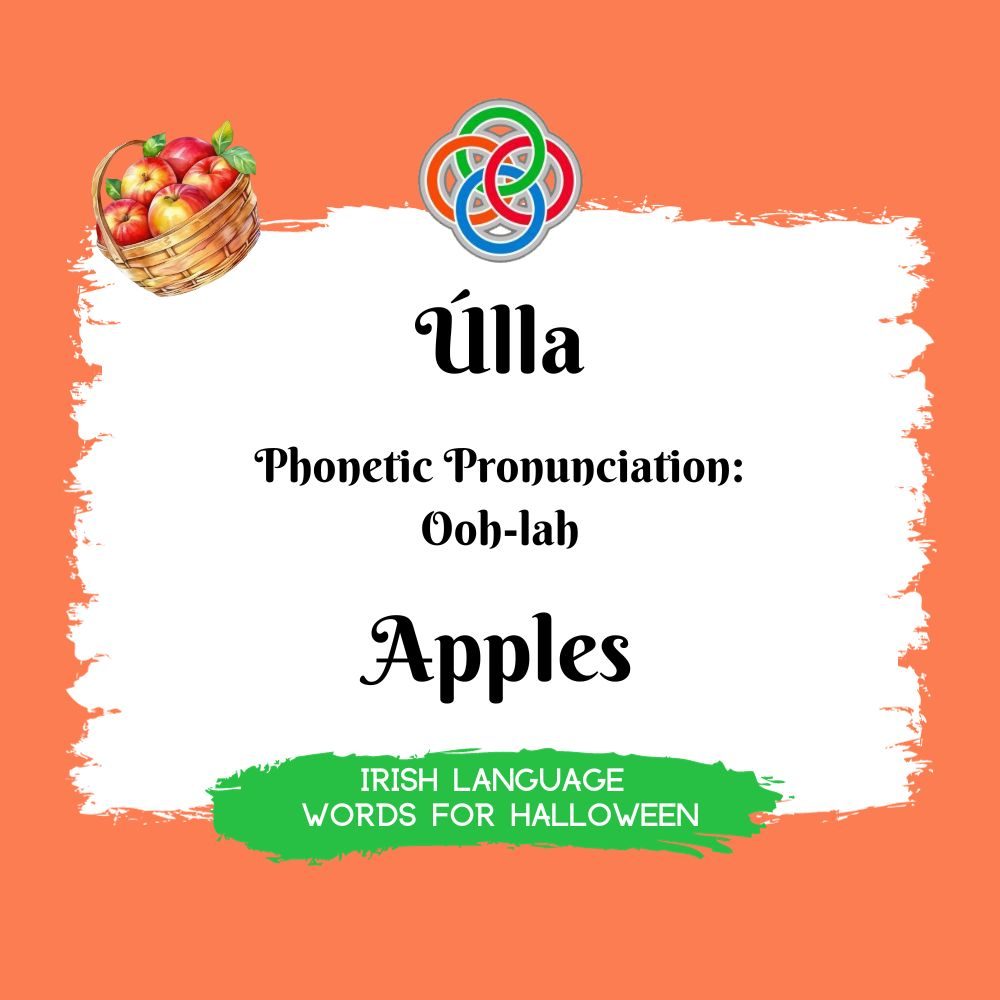
In Celtic mythology, apples are often associated with the Otherworld and immortality. The Isle of Avalon, which means "Island of Apples," is said to be a place where heroes and the dead go, adding a mystical quality to the fruit.
Nuts
Like apples, nuts (especially hazelnuts) are typically harvested in the autumn. Their abundance around October made them a readily available food source during Samhain celebrations, which marked the end of the harvest period and the onset of winter.
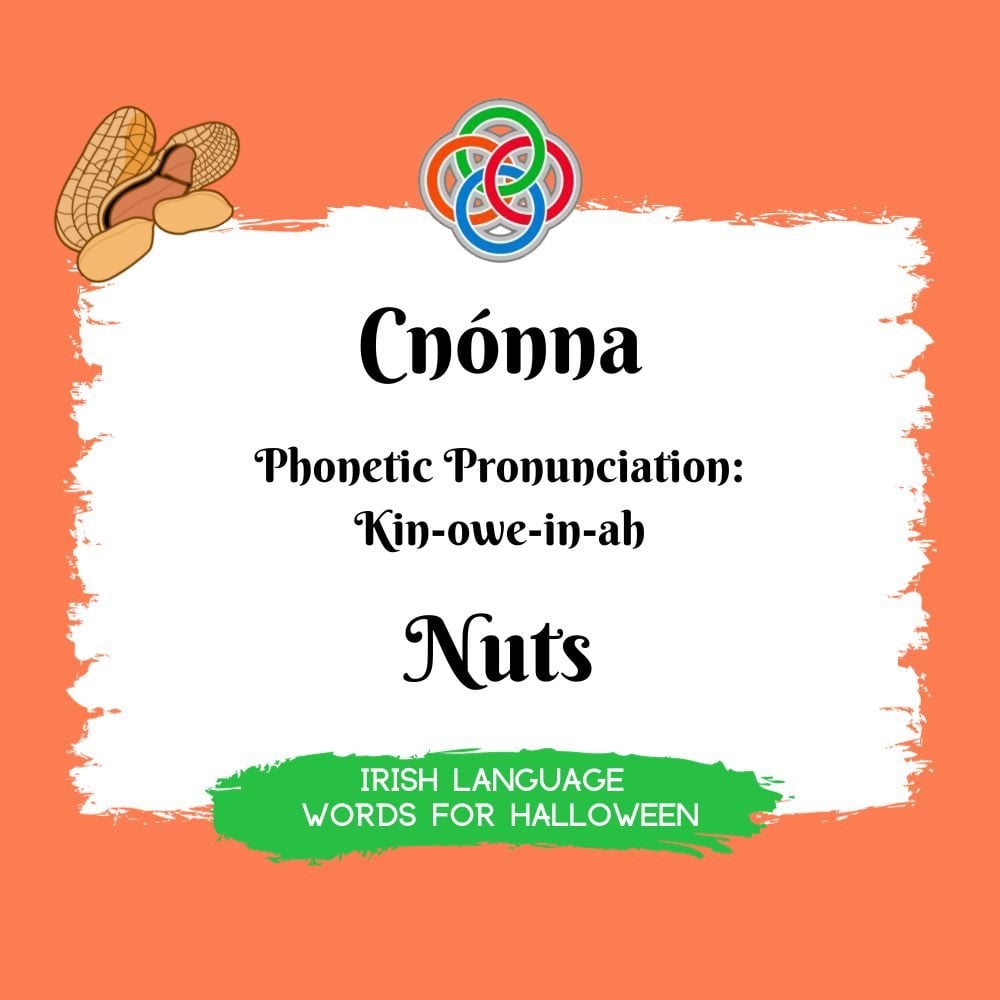
In Celtic folklore, nuts were symbols of wisdom and prophesy. The hazelnut, in particular, was highly revered; it was associated with wisdom in Irish mythology, where the Salmon of Knowledge is said to have eaten the nine hazelnuts that fell into the Well of Wisdom.
Barmbrack
Barmbrack is a traditional Irish fruitcake that is closely associated with Halloween celebrations in Ireland. This sweet, yeasted bread is studded with dried fruits such as raisins, sultanas, and sometimes candied peel. What makes barmbrack particularly special during Halloween are the various items traditionally baked into the loaf as part of a fortune-telling ritual.
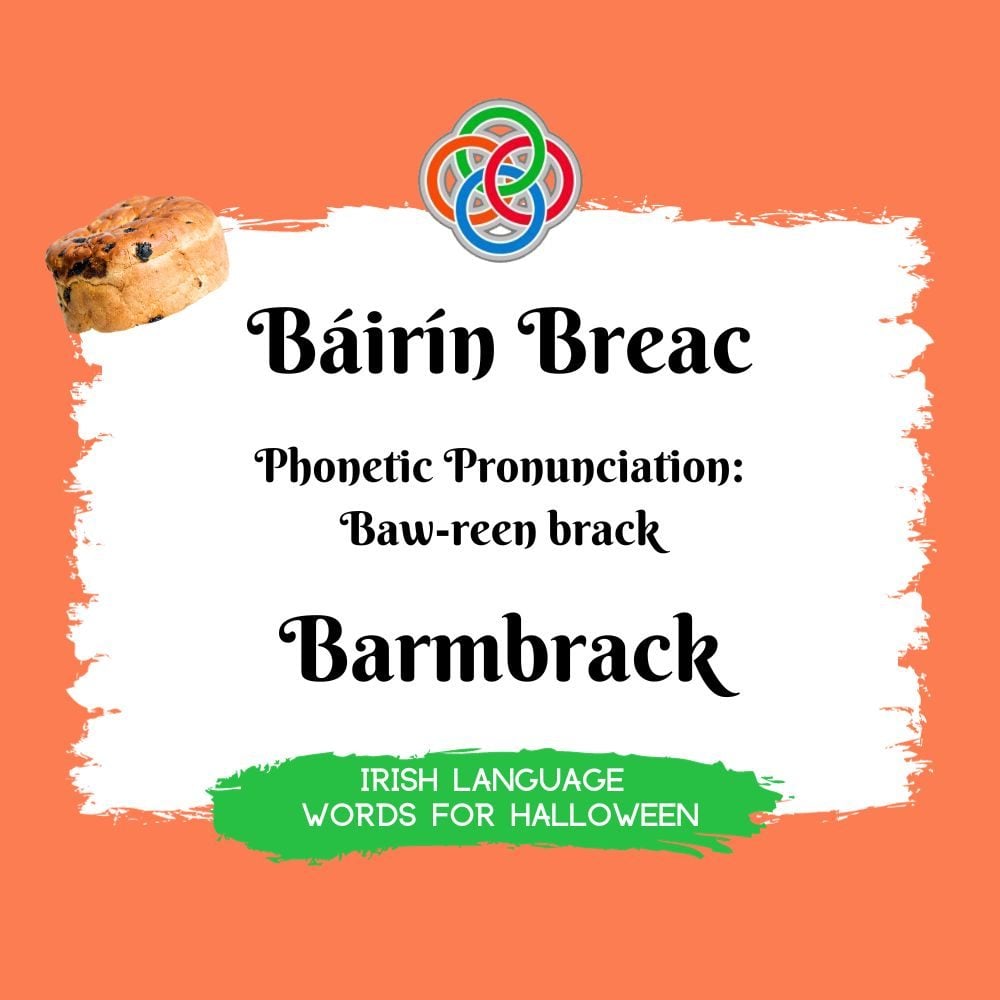
Each item baked into the barmbrack has a specific meaning, and finding one of these items in your slice of cake is supposed to predict your fortune for the coming year:
- A Pea: Finding a pea means that you will not marry in the coming year.
- A Stick: A stick predicts an unhappy marriage or continual disputes.
- A Piece of Cloth: This signifies bad luck or poverty.
- A Coin: Discovering a coin means that wealth is coming your way.
- A Ring: The most sought-after item, a ring foretells a marriage within the year.
Sweets or Candy
During Samhain, it was customary to leave offerings of food and drink outside as appeasements for the spirits or fairies (aos sí) to ensure that the people and their livestock survived the winter.
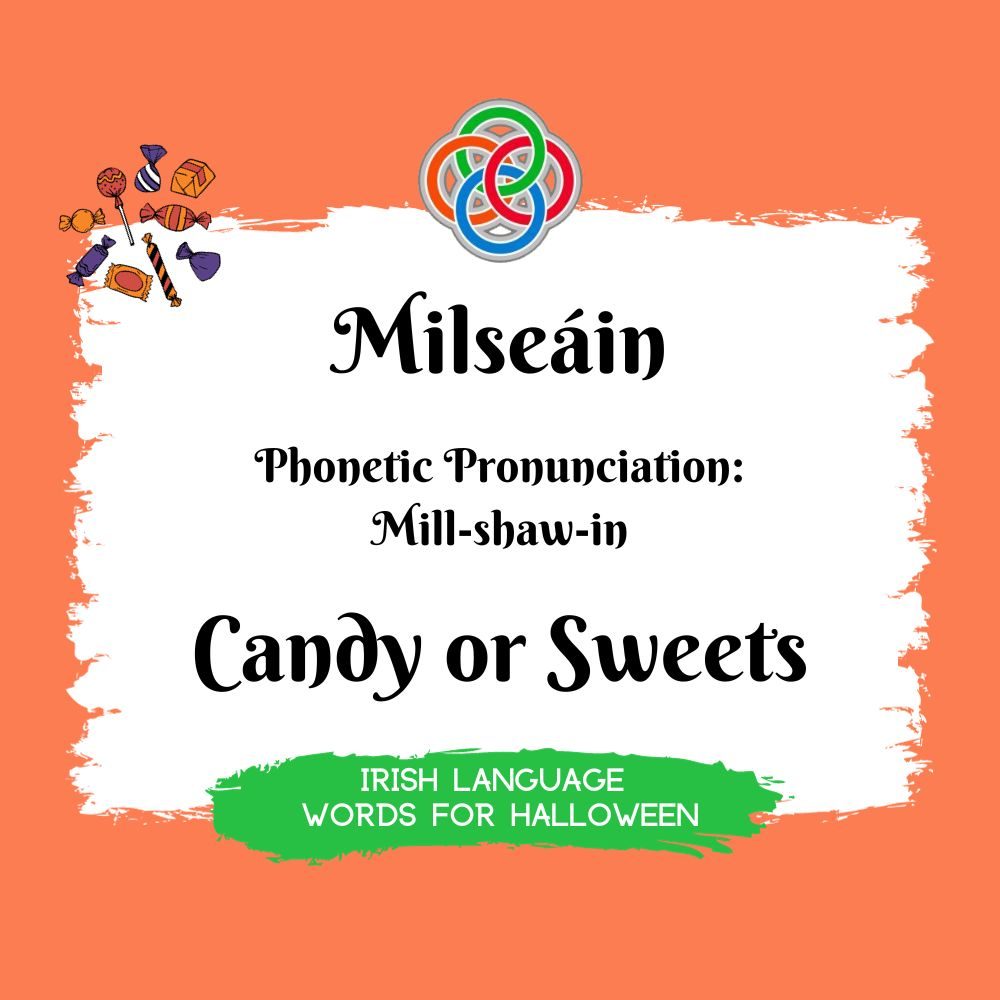
These offerings were meant to either appease potentially malevolent spirits or to welcome deceased ancestors who were thought to visit during this time. When we distribute sweets or candy at Halloween we are continuing this ancient Celtic tradition.
Chocolate
The custom of trick-or-treating as it is known today was shaped significantly by American cultural influences, especially during the 20th century. Irish and Scottish immigrants brought earlier traditions of dressing up and going door-to-door requesting food or money to North America.
Over time, this evolved into the more commercial and family-friendly practice of children wearing costumes and asking for sweets from their neighbors.
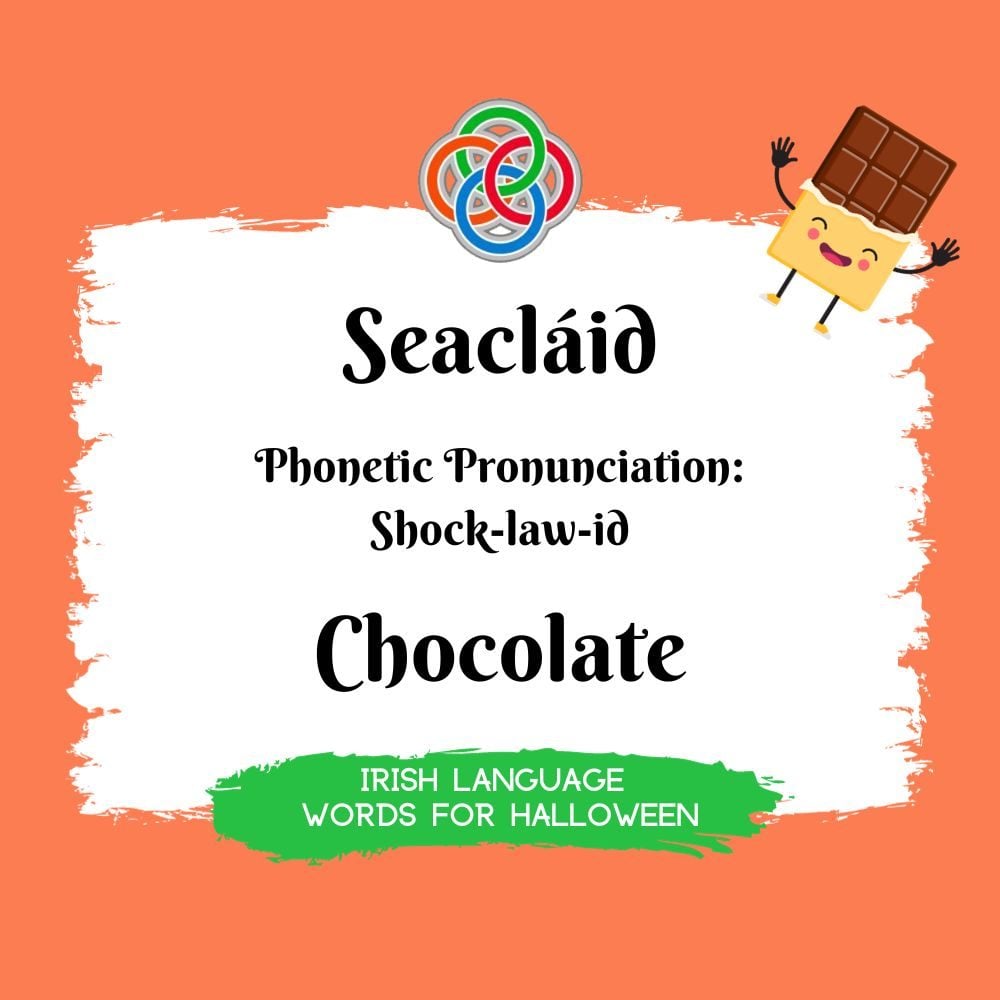
The widespread adoption of Halloween in the United States popularized the custom of giving out candy, partly because it was convenient, non-perishable, and appealing to children. As American cultural influences returned to Ireland, the practice of giving sweets became the norm.
Colcannon
Halloween marked the end of the harvest season and the beginning of winter. Colcannon is made from ingredients that are harvested in late autumn in Ireland. Potatoes and cabbage or kale, naturally became a part of the seasonal menu.
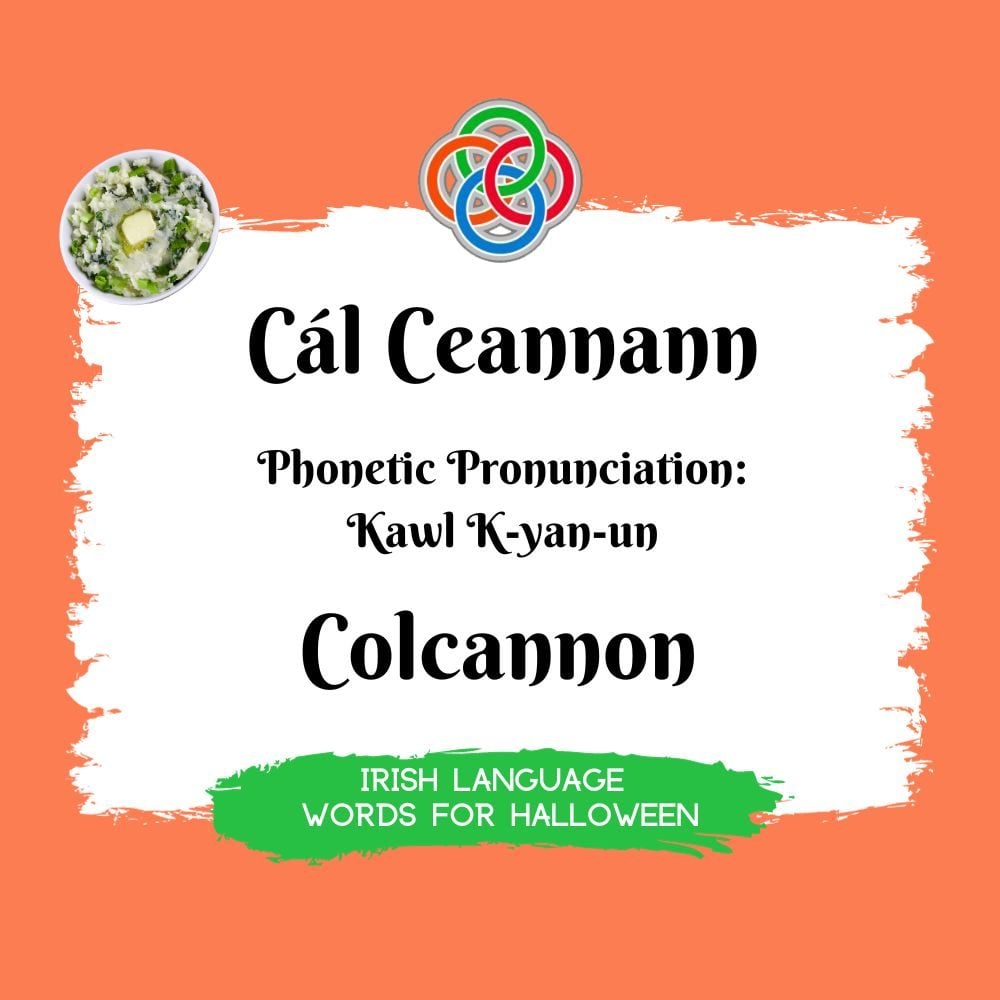
Colcannon traditionally played a role in Halloween fortune-telling customs in Ireland. Charms were often hidden inside the dish, and finding one could predict the diner's future.
Common charms included a thimble (signifying that the finder would remain unmarried), a ring (indicating a wedding within the year), and a coin (predicting wealth).
Pumpkin
The Irish word "puimcín" (pronounced "pum-keen") translates to "pumpkin" in English.
It refers specifically to the type of squash commonly associated with Halloween, used for carving jack-o'-lanterns and as a seasonal decoration.
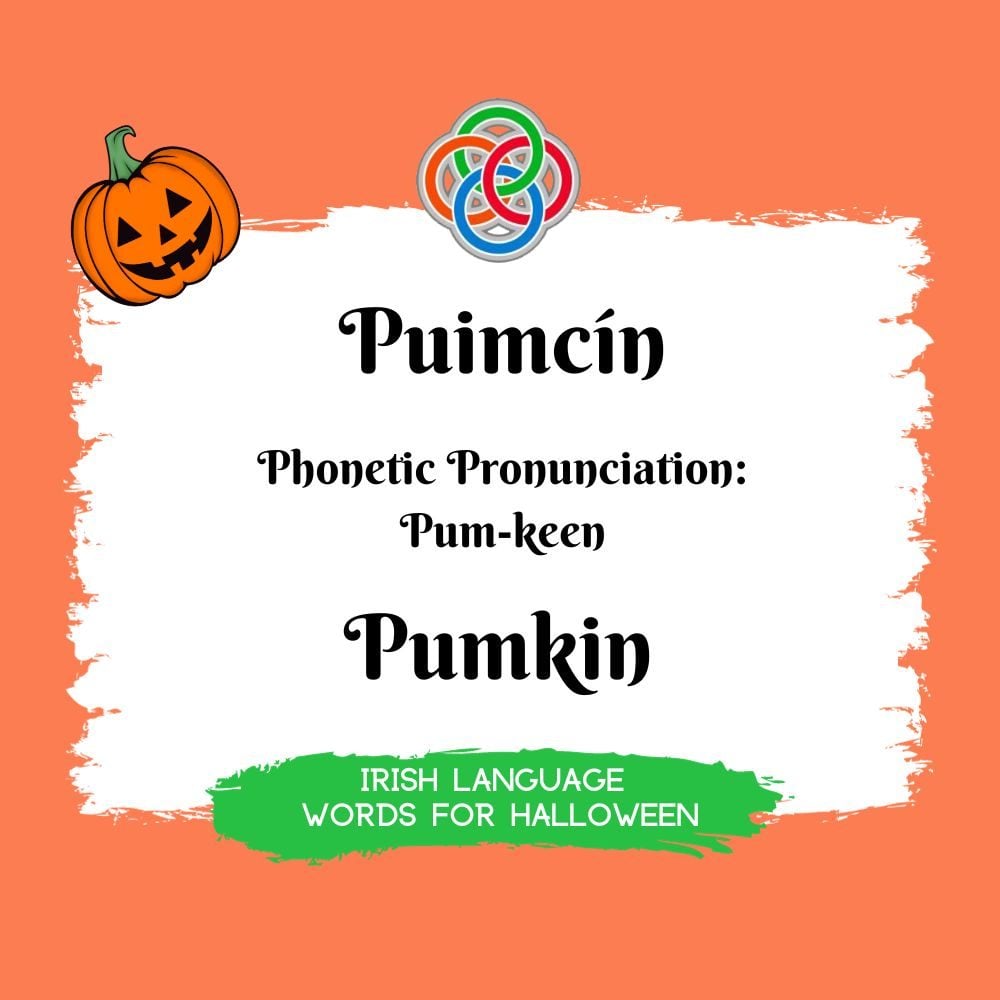
In years gone by the Irish used rutabagas or swedes to carve Jack O'Lanterns. The word puimcín is a relatively new addition to the Irish language and is a derivative of the original English word.
Creatures of Halloween
Halloween is closely linked with a variety of mythological and supernatural creatures, each with its own cultural and historical significance.
Many of these creatures are drawn from folklore where they are often associated with the darker, more mysterious aspects of the spiritual world.
Bats
Bats are active at night and are one of the few mammals capable of sustained flight. Their nocturnal activity and eerie flight patterns in the dark have long made them subjects of fear and fascination, which aligns well with the Halloween theme.
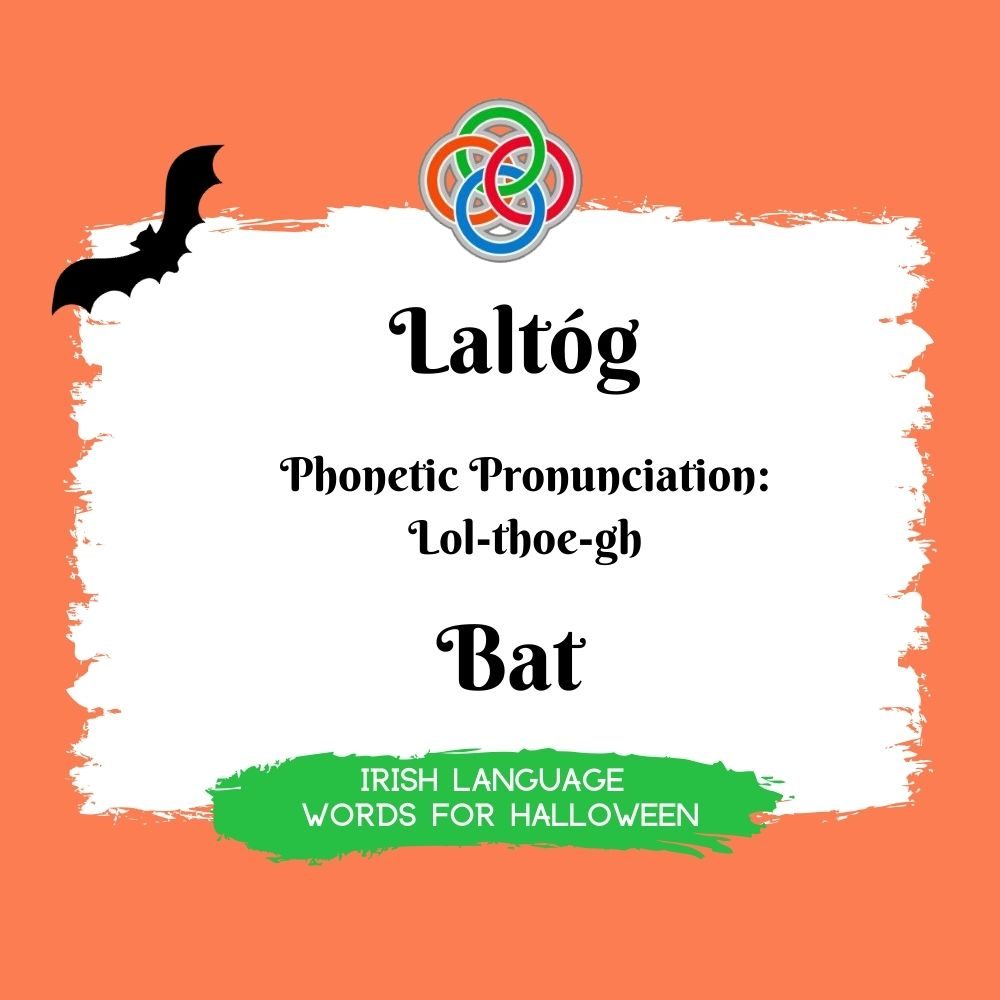
In many cultures, bats are associated with mystery and the supernatural. Their presence in dark caves (often viewed as portals to the underworld) and their silent flight made them mysterious and otherworldly creatures in the eyes of ancient peoples.
Spider
In some Irish traditions, spiders are seen as protectors against evil spirits. Finding a spider in your home is considered good luck because spiders catch and consume other insects, effectively keeping the home safer and cleaner from pests.
During Samhain, when the veil between worlds is believed to be thinnest and spirits might enter the world, the presence of spiders could symbolically represent a protective barrier against malevolent forces.
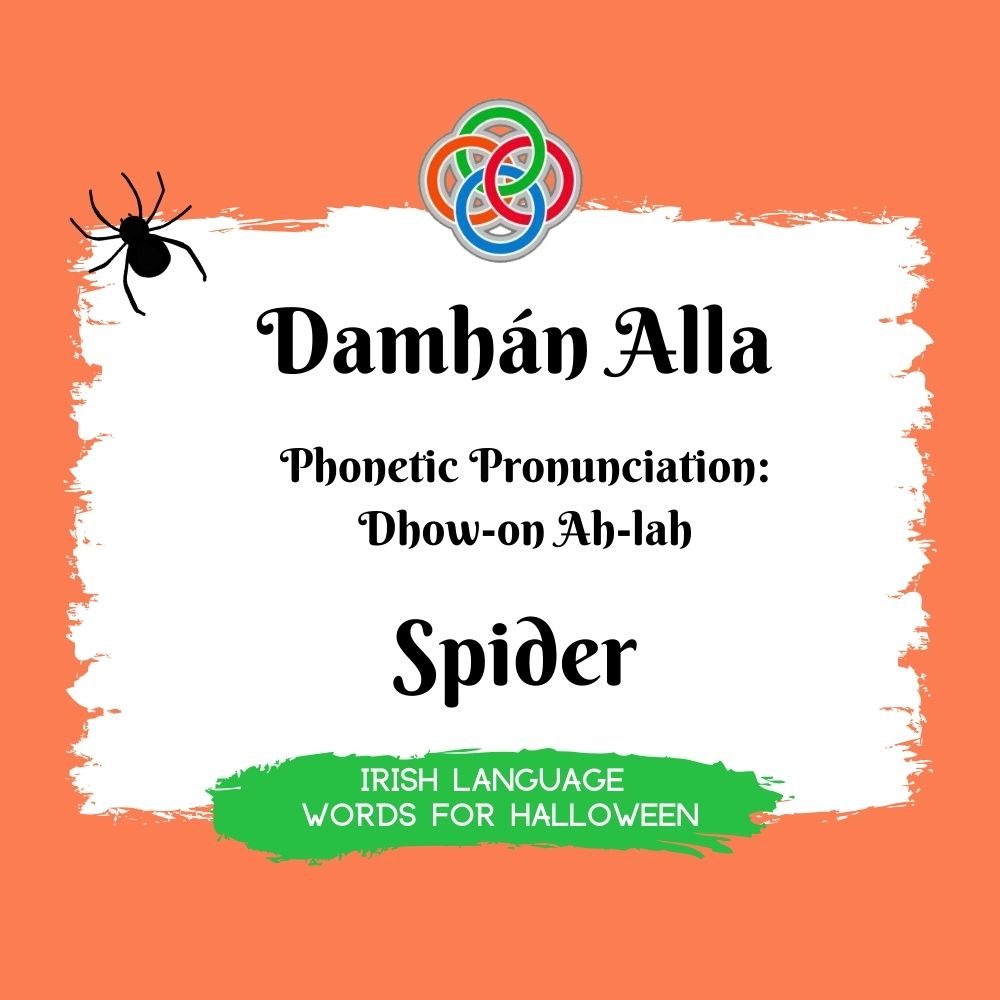
Similar to other cultures, where spiders are viewed as weavers (like the Fates in Greek mythology who spin the thread of life), in Irish folklore, spiders might be considered as weavers of destiny.
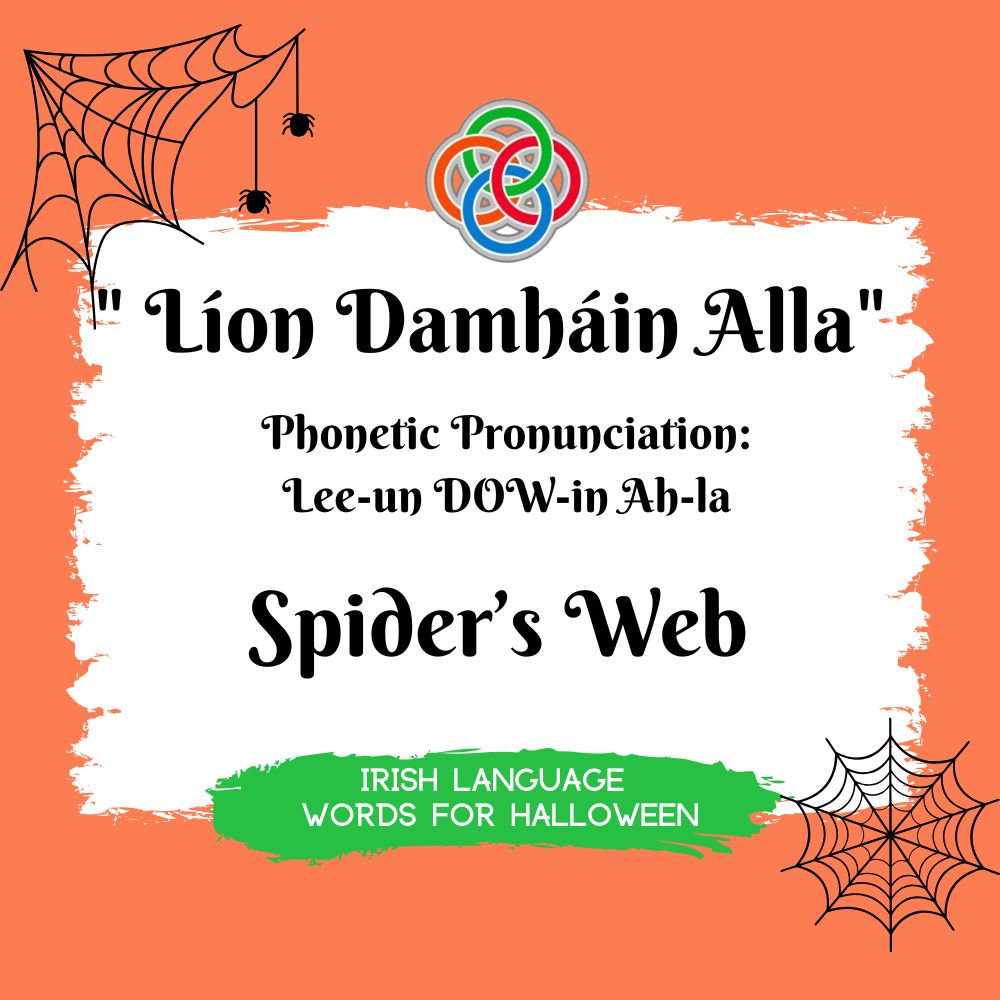
This concept connects them spiritually to Samhain, a pivotal time of year when prophecies and divinations were performed to predict future hardships and fortunes during the dark winter months.
Cat
In medieval Europe, black cats became associated with witchcraft, devilry, and evil spirits. They were often thought to be familiars, or animal guides, to witches.
This superstition led to the widespread belief that black cats could transform into human shape to act as spies or co-conspirators for witches.
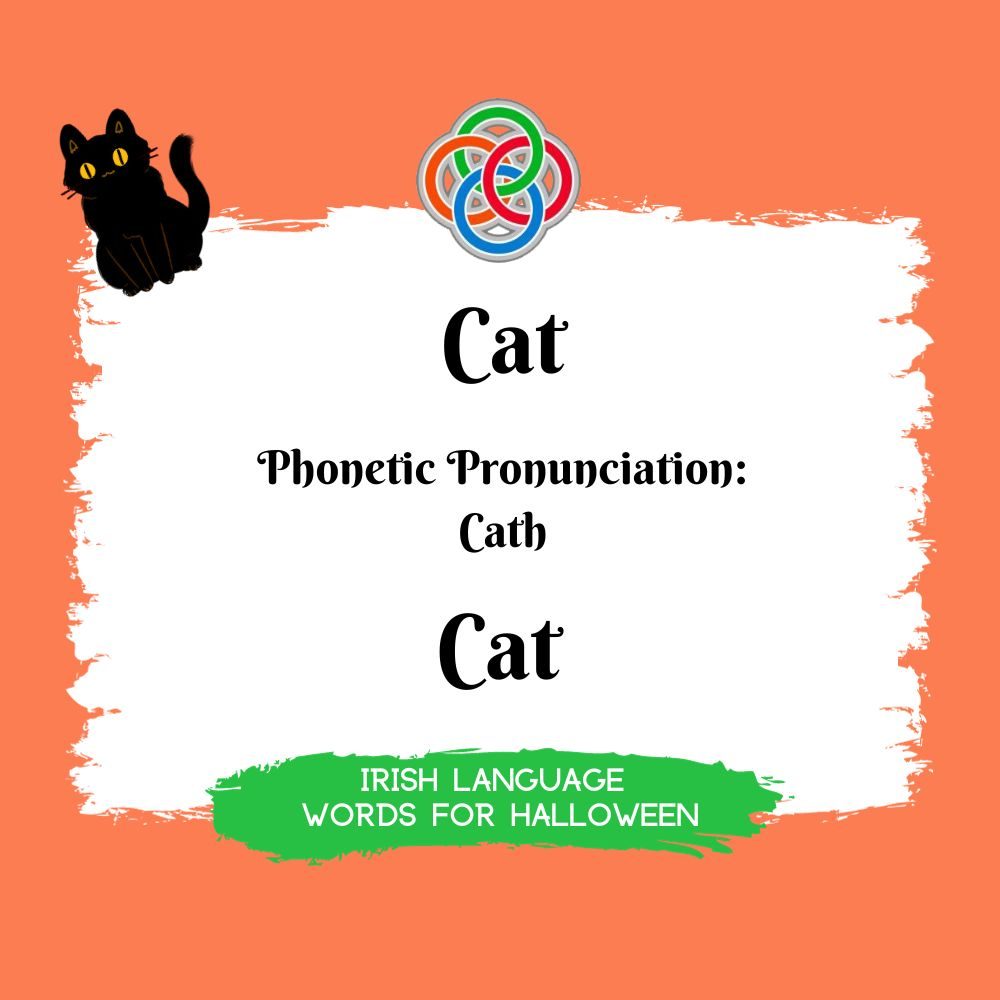
The Irish word for cat is the same as in English, but the last t is pronounced more like a -th.
The Celts believed that cats were magical creatures with the power to bring good or bad luck, capable of influencing events in mysterious ways.
Ghosts
The most iconic Halloween creatures, ghosts are believed to be the souls of the dead who have returned to the mortal world.
They are a common theme in Halloween storytelling and are central to the idea of the veil between the living and the dead being thinnest on Halloween.
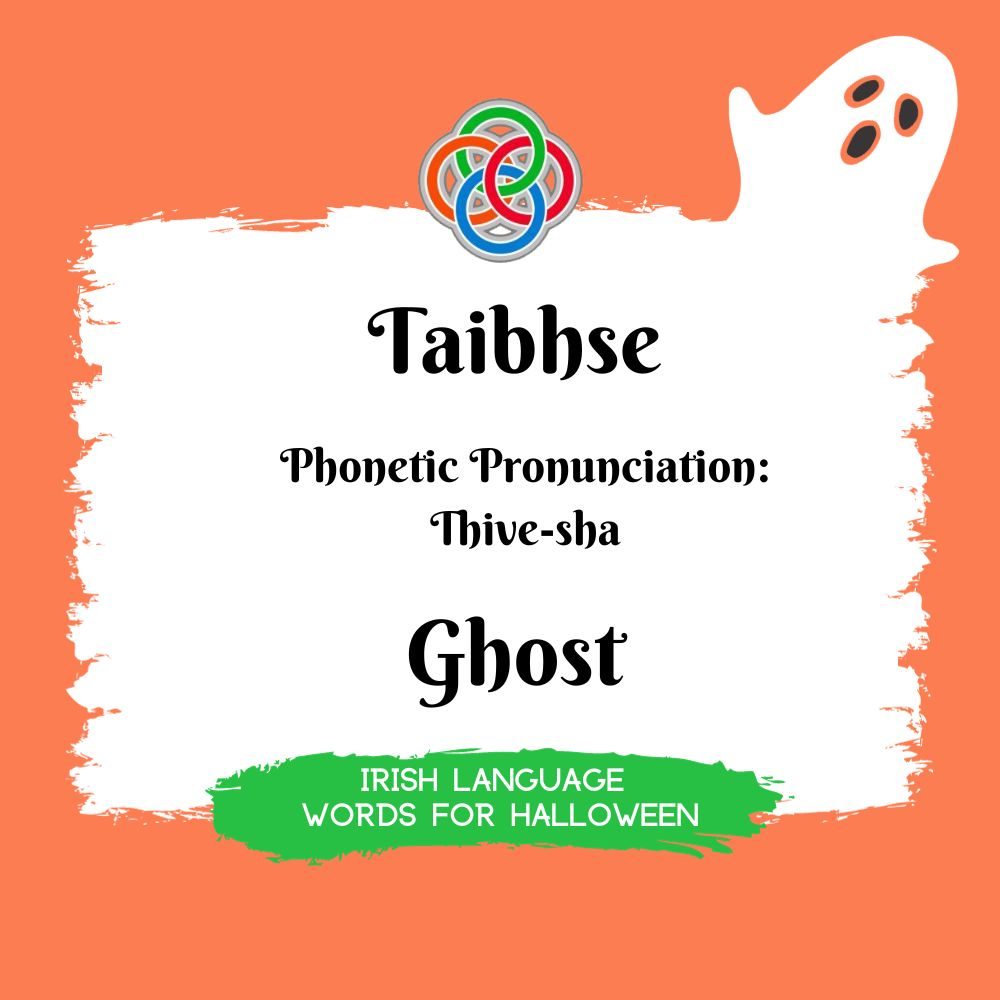
The Irish word "taibhse" (pronounced "thive-sha or thive-shuh") translates to "ghost" or "specter" in English.
It refers to an apparition or a visible spirit, typically considered to be the soul of a deceased person that has manifested itself to the living. This word captures the essence of ghostly appearances and is associated with supernatural themes and folklore in Irish culture.
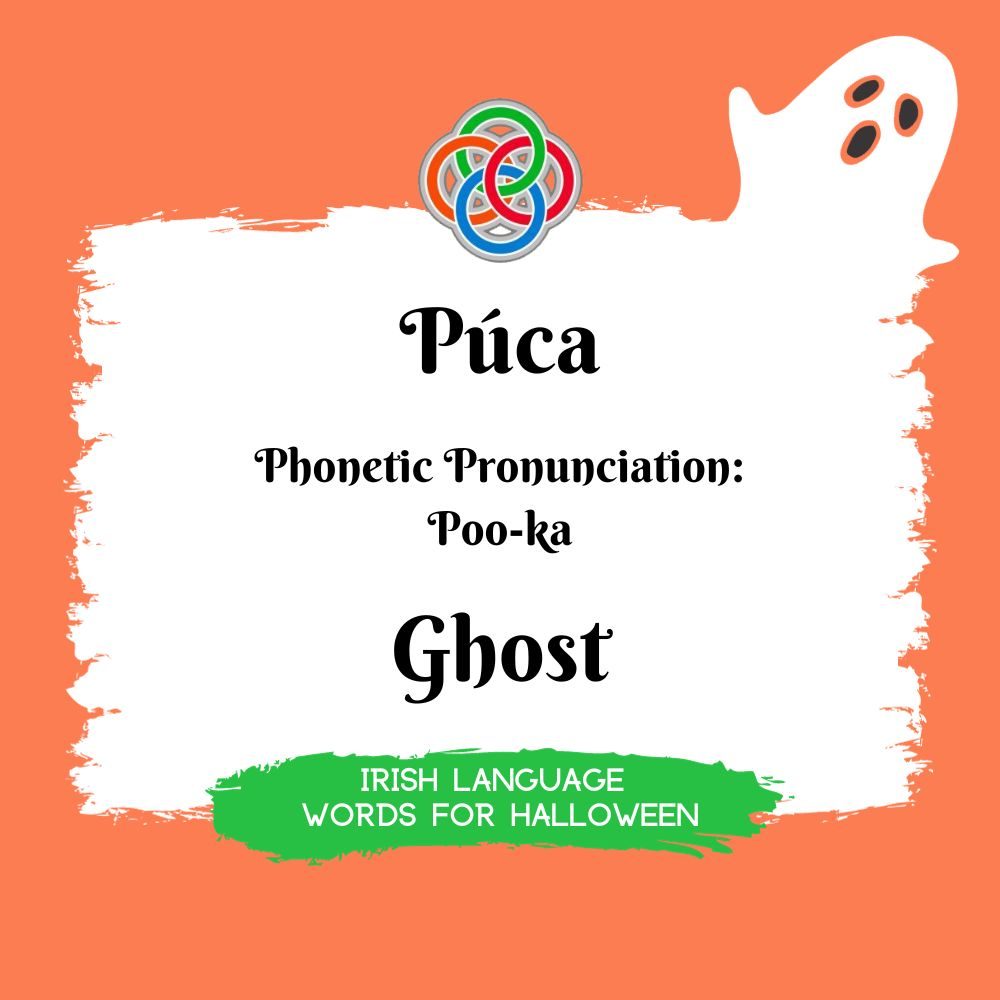
The Irish word "púca" (pronounced "poo-ka") refers to a type of spirit or fairy creature in Irish folklore. The púca is known for being a shape-shifter that can assume a variety of terrifying or pleasant forms.
It is often depicted taking the form of a horse, rabbit, goat, goblin, or even a human with animal features. Púcas are known to be both mischievous and benevolent; while they can lead travelers astray, they can also offer helpful guidance and have been known to aid farmers by caring for their animals.
The nature of a púca's behavior towards humans is unpredictable, making them a complex figure in Celtic mythology.
Irish Words Associated With Witches
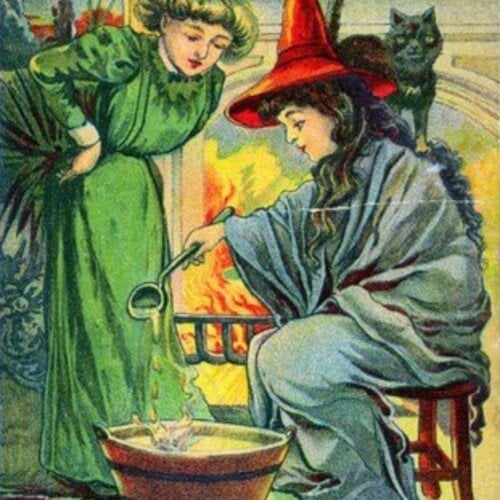
Witches in Irish folklore hold a distinct and fascinating place, woven deeply into the cultural and mythical fabric of the country. Unlike the more malevolent depictions commonly found in other European and American traditions, Irish witches often appear as more nuanced figures, sometimes benevolent or merely mischievous, though they can also be malevolent.
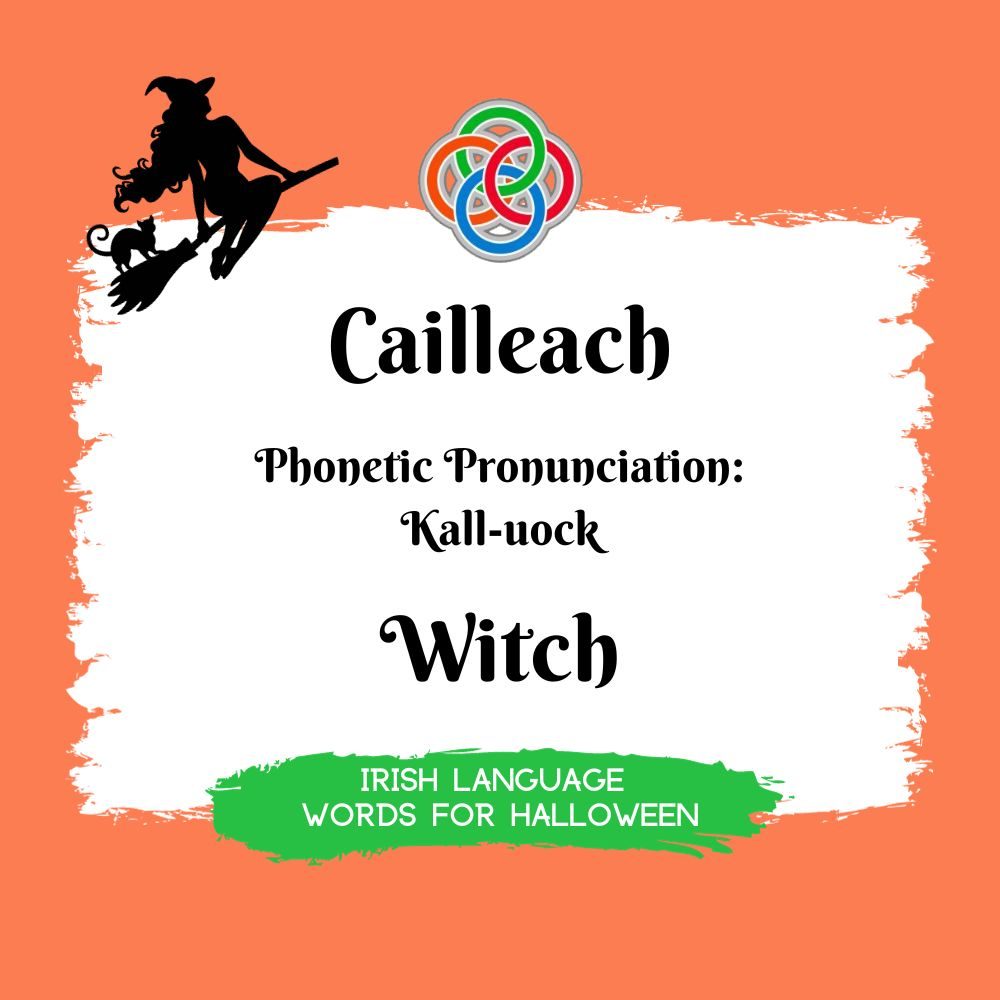
The Cailleach is perhaps one of the most notable witch-like figures in Irish mythology. Often depicted as a hag or a crone, the Cailleach is a powerful ancient goddess associated with winter and the harshness of nature.
She is believed to control the weather and embodies the spirit of the dark and cold months. The Cailleach is not strictly a witch in the conventional sense but shares many characteristics typical of witches, such as shape-shifting abilities, control over natural elements, and a deep connection to the spirit and animal worlds.
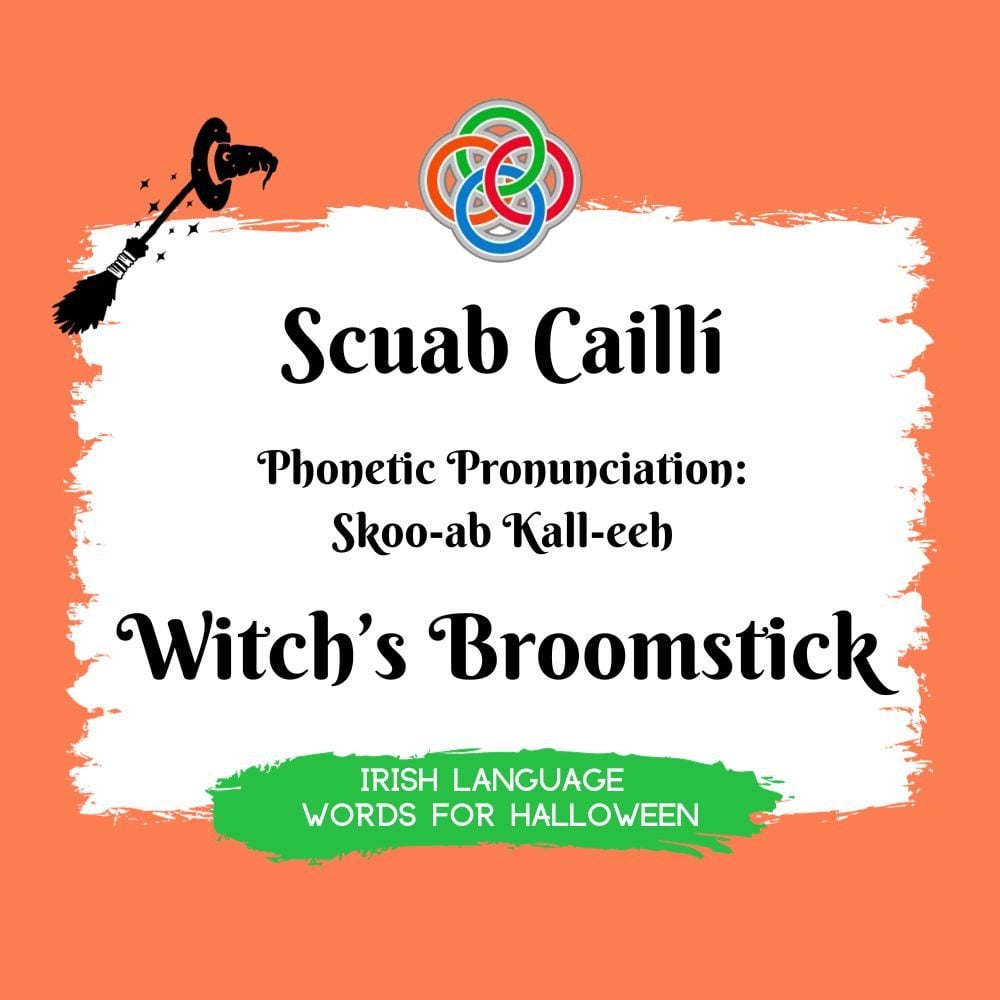
The Irish phrase "scuab caillí" translates to "witch's broom" in English. In this phrase, "scuab" means "broom," and "caillí" (or often spelled as "cailleach") means "of the witch" or "of the old woman." It is the genetive tense of the noun "cailleach."
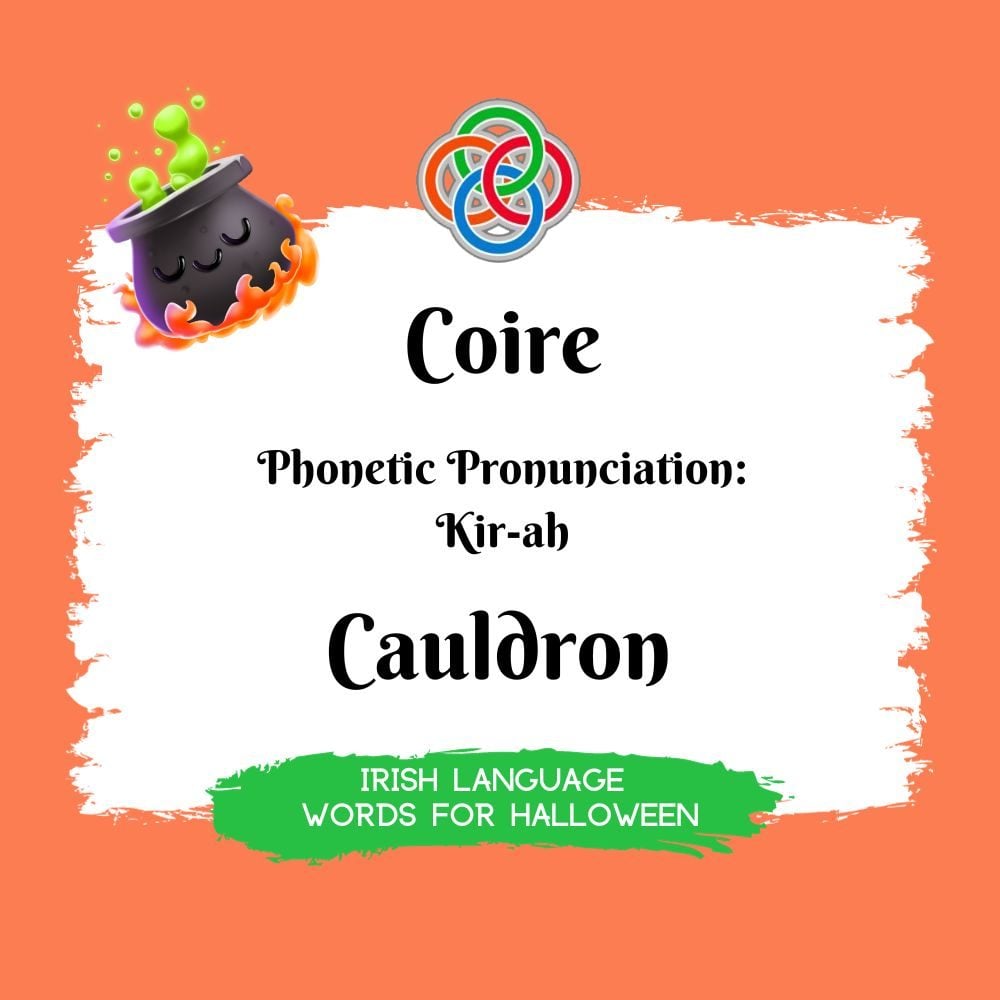
The Irish word "coire" (pronounced "kir-ah") primarily means "cauldron" or "kettle" in English.
Cauldrons hold a significant place in Celtic mythology and Irish folklore, often associated with magic, mysticism, and divine inspiration. For example, in some tales, cauldrons are portrayed as vessels of rebirth or as sources of endless sustenance or knowledge, echoing the broader mythological themes of regeneration and abundance.
Trick or Treating Words
The tradition of going from home to home in search of treats at Halloween originated in Ireland.
The Irish phrase "bob nó bia a imirt" translates to "to play a trick or give food" in English. This phrase encapsulates the practice closely associated with Halloween, particularly the tradition of trick-or-treating. In this context, "bob" refers to a trick, and "bia" means food.
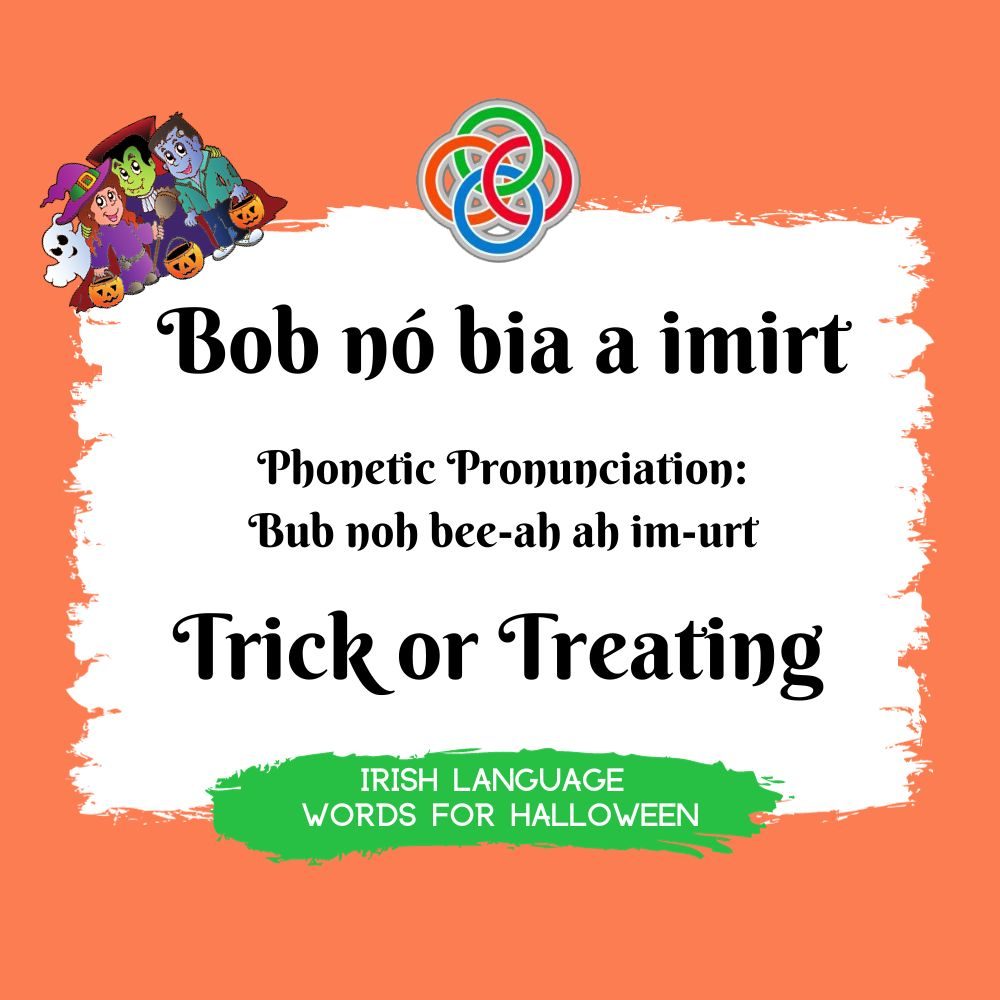
The phrase reflects the choice given to householders when children come to their doors during Halloween: to either endure a mischievous trick or offer treats (food) to the visitors.
This tradition is an integral part of modern Halloween celebrations, rooted in the ancient practices of Samhain where food played a central role in festivities and rituals.
Halloween Costumes
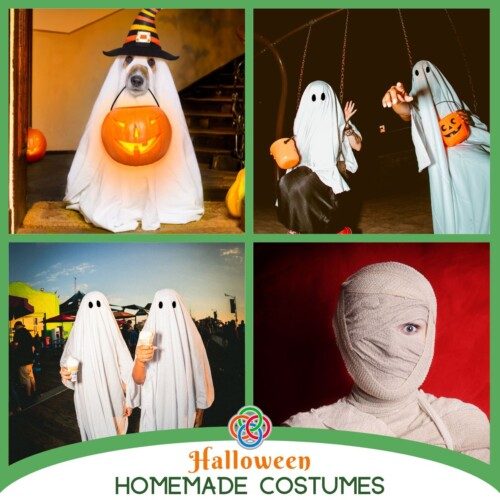
During Samhain, the spirit world became blurred, allowing spirits and other supernatural entities to cross over into the human realm. To ward off or appease these spirits, people would wear masks and costumes.
Disguising themselves was thought to either protect them from harm by confusing the spirits or to allow them to blend in unnoticed among the supernatural visitors.
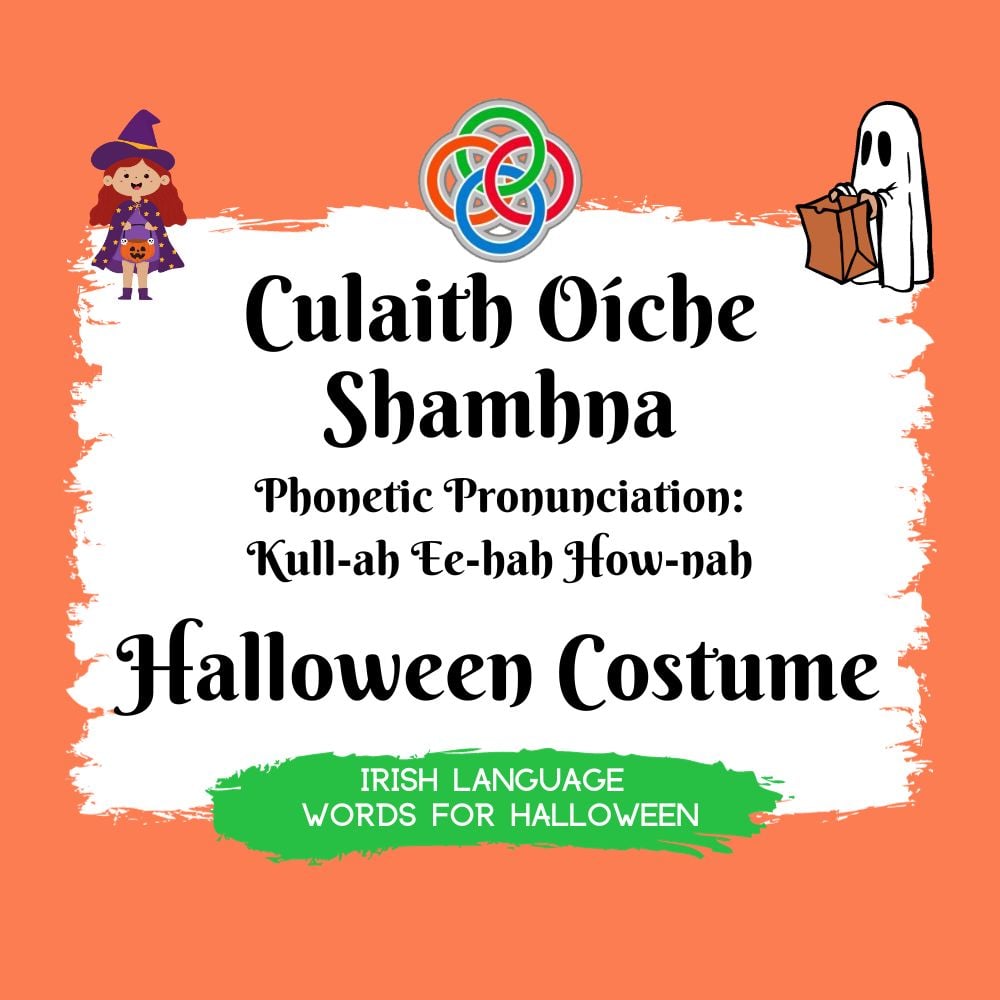
The Irish phrase "Culaith Oíche Shamhna" translates to "Halloween costume" in English. In this phrase: "Culaith" means "suit" or "costume." "Oíche Shamhna" translates to "Halloween," literally meaning "the night of Samhain."
Jack O'Lantern
The Irish phrase "Seán na Geallaí" translates to "Jack of the Lights" in English. This term is directly related to the concept of "Jack-o'-lantern," which refers to the carved pumpkins with lights inside them that are commonly displayed around Halloween.
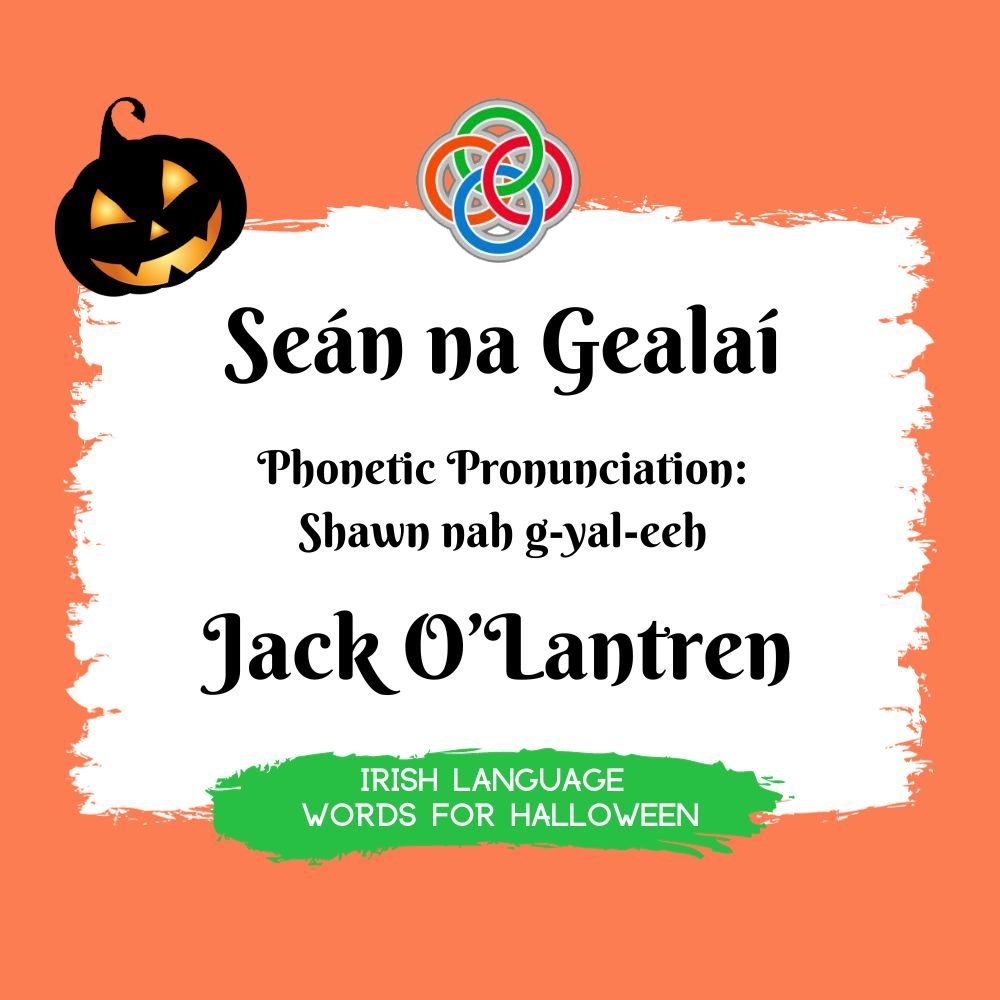
The phrase and the tradition both stem from an old Irish folktale about a character named Stingy Jack, who tricks the devil and, unable to enter either heaven or hell, is doomed to wander the Earth with only a burning coal in a carved-out turnip to light his way.
This led to the creation of "Jack-o'-lanterns" to ward off evil spirits during the Halloween season.
Scary Movie
Halloween is the most popular time of year for watching scary movies or horror films.
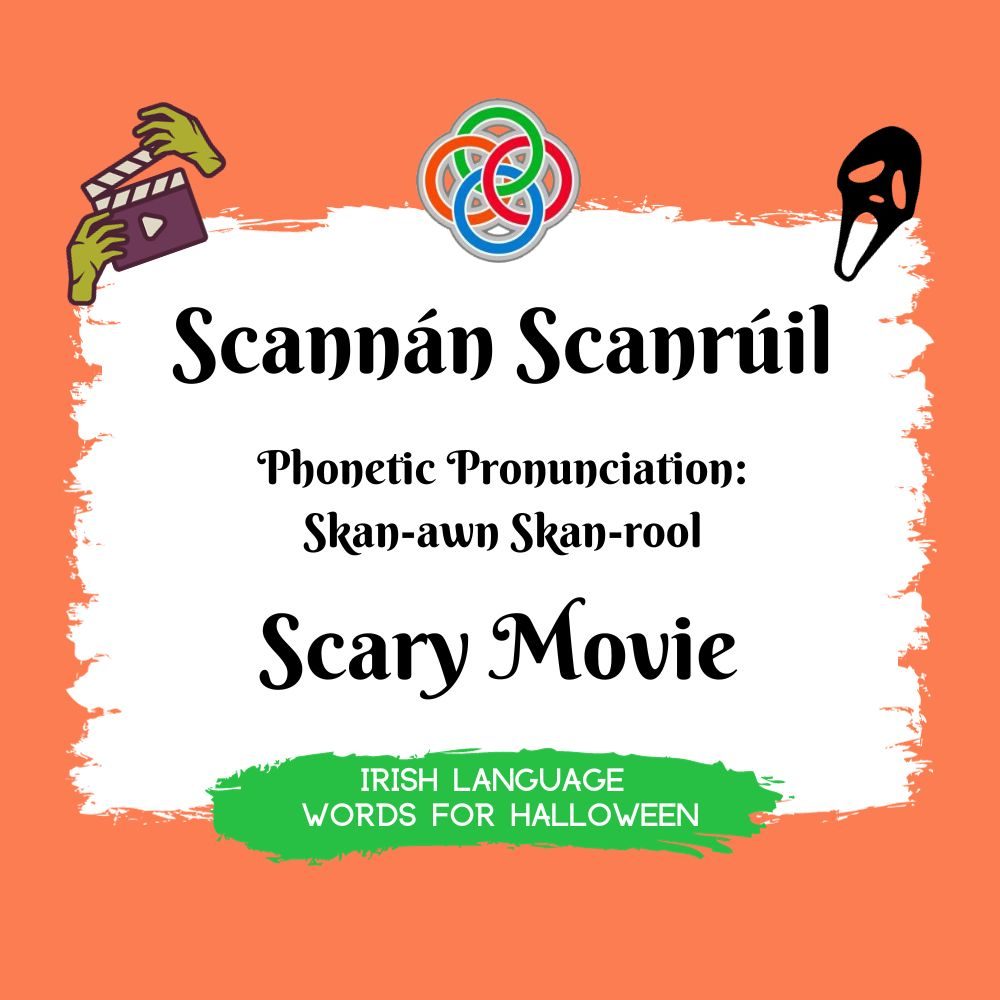
The Irish language translation for "scary movie" is "scannán scanrúil".
Here, "scannán" means "movie" or "film," and "scanrúil" is the adjective form of "scary." This phrase can be used to describe any film that is intended to frighten or unsettle the viewer.
Good Luck Practicing Irish Words At Halloween
In modern times, Halloween in Ireland resembles the American version with costumes, trick-or-treating, and parties, but also includes traditional foods like barmbrack (a fruitcake) and activities like bonfires and fireworks.
There are also parades and festivals, particularly the Banks of the Foyle Halloween Carnival in Derry, one of the largest Halloween celebrations in Europe.
Halloween, with its deep roots in Irish history and culture through the festival of Samhain, continues to be an important and widely celebrated holiday in Ireland, maintaining both historical significance and contemporary enthusiasm.
Perhaps you'll use our list of Halloween words today to learn some words from the language of our ancestors.

Slán agus beannacht,
(Goodbye and blessings)
Mairéad -Irish American Mom
Pronunciation - slawn ah-gus ban-ock-th
Mairéad - rhymes with parade
Halloween Recipes
- Broomstick Witch Snacks For Halloween
- Spider Deviled Eggs For Halloween
- Homemade Chocolate Pretzel Spider Webs For Halloween
- Barmbrack - A Traditional Fruity Bread From Ireland


Irish Superstitions
- Irish Halloween Superstitions Foretelling Romance, Love And Marriage
- Five Spooky Irish Folktales for Halloween
- The Wailing Banshee in Irish Mythology
- The Irish - A Superstitious Race




Maryellen Dineen Stegemiller
Thank you so much for taking the time to do this post. I am sure
it will be treasured by all who read .
Irish American Mom
Hi Maryellen - Thank you so much for your lovely message. I’m really glad you enjoyed the post! It was a pleasure to share a bit of the Irish language and traditions for Halloween. It’s wonderful to know it resonated with you and others.
Wishing you a very happy Oíche Shamhna!
Mairéad